

Quantique Défense

Quantum computing could prove to be a game changer – if it works. (Getty images) To discuss the state of quantum computing and its military applications, we talked with Joe Altepeter, a program manager in DARPA’s Defense Sciences Office (DSO). Altepeter manages two of DARPA’s three main quantum programs — including the (US2QC) program, which is about uncovering new, novel, and overlooked avenues in quantum exploration. Breaking Defense: Quantum computing is talked about as something that can be both offensive in the sense that it has the capability to break all known encryption, and defensive to prevent adversaries from breaking… […]

Olemedia Canadian quantum computing company Xanadu said Tuesday it is co-developing a new algorithm tooling with Rolls-Royce (OTCPK:RYCEF)(OTCPK:RYCEY), to boost research in aerospace and defense, among other things. Xanadu and Rolls-Royce will work with PennyLane, Xanadu's open-source quantum computing software. The first project will develop quantum software functionality tailored for Quantum Singular Value Transformation in PennyLane, the companies said. […]

Those of us who aren’t Einsteins – I’m talking about myself here – don’t totally get what “quantum computing” is. And that’s okay. For the foreseeable future, most of us will keep using classic computers that calculate in binary bits (either zeroes or ones) rather than graduating to quantum computers that calculate in qubits (any combination of zeroes and ones simultaneously). But increasingly, people working in drug discovery, economics, weather forecasting, aviation and supply-chain logistics – to name just a few — need quantum computing’s power to process unimaginable amounts of data fast, answering complex questions that neither classic computers… […]

News July 02, 2019 Image: NIST According to information from American Associates, Ben-Gurion University of the Negev (New York), the university is establishing research relationships with different defense organizations as well as a number of companies in the high-tech industry such as Accubeat Ltd., a maker of atomic clocks. BGU researchers say that they have already delivered several prototypes of various technologies to these companies and defense organizations. Prof. Ron Folman, the Ruth Flinkman-Marandy and Ben Marandy Chair in Quantum Physics and Nanotechnology and head of the BGU Atom Chip Laboratory, said of the announcement: “Quantum theory includes a very strange set of rules and its quirkiness will result in revolutionary quantum technology… […]

The Israel Innovation Authority announced the formation of the largest consortium to date, for the development of quantum computing technologies. Five Israeli companies will come together to form this consortium: defense giants ELTA Systems (an Israel Aerospace Industries group) and Rafael Advanced Defense Systems, as well as Quantum Art, Classiq, and Qedma Quantum Computing. The budget will be NIS 115 million over a three-year period. The technological development will be supported by leading academic entities, including Hebrew University, Weizmann Institute, Bar-Ilan University, Technion, and also a research group from the Soroka Hospital. A Weizmann Institute team led Professor Roee Ozeri,… […]
Written by Dave Nyczepir Dec 12, 2022 | FEDSCOOP The White House’s aggressive deadlines for agencies to develop post-quantum cryptography strategies make the U.S. the global leader on protection, but the transition will take at least a decade, experts say. Canada led the Western world in considering a switch to post-quantum cryptography (PQC) prior to the Office of Management and Budget issuing its benchmark-setting memo on Nov. 18, which has agencies running to next-generation encryption companies with questions about next steps. The memo gives agencies until May 4, 2023, to submit their first cryptographic system inventories identifying vulnerable systems, but… […]

Over the next decade, quantum computing will unlock new technological advances and upend the current security landscape. Quantum computers of sufficient size and sophistication could “jeopardize civilian and military communications, undermine supervisory and control systems for critical infrastructure, and defeat security protocols for most Internet-based financial transactions,” the White House cautioned in May. “In short,” warned a separate report from the National Counterintelligence and Security Center, “whoever wins the race for quantum computing supremacy could potentially compromise the communications of others.” Once a quantum computer becomes sophisticated and large enough to be considered a threat to modern-day encryption, it is… […]
Learn more about our cybersecurity solutions. […]

Jan. 12, 2023 — Fast and accurate decision-making is crucial to making the best use of resources within defence and security, and ultimately, keeping people safe. And while humans are an essential part of the decision-making process, scenarios are becoming increasingly complex for humans alone in a fast-paced world. The Defence Science and Technology Laboratory (Dstl), has a mission to advance UK capability through the development and application of novel or innovative science and technology. PA Consulting has been working with Dstl and the Ministry of Defence (MOD) for many years on a range of new technologies to build understanding… […]
Quantum computing could prove to be a game changer – if it works. (Getty images) To discuss the state of quantum computing and its military applications, we talked with Joe Altepeter, a program manager in DARPA’s Defense Sciences Office (DSO). Altepeter manages two of DARPA’s three main quantum programs — including the (US2QC) program, which is about uncovering new, novel, and overlooked avenues in quantum exploration. Breaking Defense: Quantum computing is talked about as something that can be both offensive in the sense that it has the capability to break all known encryption, and defensive to prevent adversaries from breaking… […]

L’Australia – United Kingdom – United States Partnership (AUKUS) n’est pas qu’une histoire de sous-marins ou de propulsion nucléaire. Elle sera bien plus que cela avant que ces premiers navires soient mis à l’eau, avec des débouchés bien plus nombreux, plus rapides et plus sensibles dans d’autres domaines. Cette alliance pose en effet la question de la dissuasion nucléaire élargie américaine et du rôle de l’arme nucléaire dans le débat stratégique australien. Elle ouvre la porte à l’acquisition de nouvelles capacités disruptives et place les autorités australiennes face à la révision de leur posture stratégique ainsi que de leur politique capacitaire… […]

The disruptive potential of Quantum computers to break current cryptographic algorithms poses a significant threat to global IT security. PQC security will require adjustments to address currently unknown threats. However, as security is wholly dependent on the security of the firmware update mechanism, it is critical that Hash-based signatures (HBS) are implemented within firmware update mechanisms now. Quantum computers use quantum mechanical phenomena to create incredibly powerful computers that will be able to perform tasks that exceed the capability of conventional computers. Already proven on a limited scale, governments are pouring billions into continued research in this area, with the… […]
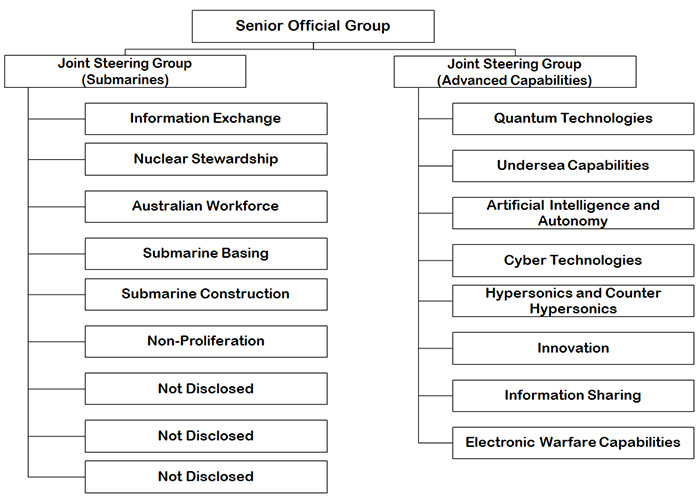
Summary: In the one year since the announcement of AUKUS, significant developments have been set in motion to enable Australia to acquire eight nuclear attack submarines (SSNs). At the same time, it has also become clear that AUKUS certainly goes beyond just SSNs and involves the development of other niche capabilities as well, in the areas such as hypersonics, quantum technologies, artificial intelligence (AI), cyber, autonomous undersea vehicles (AUV) and electronic warfare capabilities (EWC). AUKUS’s potential to tangibly impact the Indo-Pacific geopolitical discourse, however, can perhaps only be seen in the long term. The announcement of AUKUS by the leaders of… […]

More than 100 quantum software experts from universities, the CSIRO and startups have formed an alliance to keep Australia at the forefront of the emerging industry, as Industry and Science minister Ed Husic pledged government support to develop and retain talent. Launched at the University of Technology Sydney on Thursday night, the Australian Quantum Software Network (AQSN) pulls together expertise from 10 members across 30 academic groups at nine universities and two Australian-based quantum software startups, Q-CTRL and Eigensystems. The new group forms in anticipation of the first national quantum strategy and a new federal government promising to support the… […]

Australia and the United Kingdom will deepen defence research ties as early bilateral quantum tech collaboration shows signs of success, according to the top defence scientists from both nations. Given ongoing geopolitical tensions, Australia’s chief defence scientist Professor Tanya Monro said that Australia needs to collaborate with its closest allies and partners to manage the threat of “potential adversaries”. In particular, she wants to build on the roughly “70 years’ track record of working together” with the United Kingdom. Over the three years she has been Australia’s chief defence scientist, Professor Monro said there has been a significant shift in… […]

Depuis 2019, les 27 États membres de l'UE travaillent au développement d’une infrastructure européenne de communication quantique (EuroQCI). C’est pour répondre à cet objectif que l'agence spatiale européenne (ESA), la Commission européenne et la SES (Société Européenne des Satellites) ont annoncé le développement d’un système de distribution de clés cryptographiques par satellite. Le nerf de la guerre est l’information. Et en la matière, les amitiés officiellement annoncées par des États restent juste des déclarations diplomatiques. Il y a quelques années, WikiLeaks avait révélé que trois anciens présidents de la République française avaient été espionnés par les Américains. Une station d’écoute… […]

Indian Navy officers stand on the flight deck of India’s first home-built aircraft carrier INS Vikrant after its commissioning ceremony at a state-run shipyard in Kochi, India, on September 2. Photo: Reuters […]

Australian industry has queried the workability of a proposed trilateral ‘AUKUS-visa’ for highly skilled professionals to smooth the technology transfer process in AUKUS-related research and manufacturing projects. Proposed in a report published by the United States Studies Centre at the University of Sydney, an AUKUS visa would allow Australia, the United Kingdom, and the United States to “pool, rather than compete for, workers in highly specialised fields”. The visas would aim to enable multi-country research and training programs, engagement, and capability programs. The report’s author Jennifer Jackett told InnovationAus.com at the time that AUKUS advanced capabilities cooperation represents an opportunity… […]

Abstract: In the year since the United States, United Kingdom, and Australian governments announced the formation of AUKUS, a new alliance whose centrepiece is to be the supply of nuclear-powered submarines to Australia, a robust critique of the nuclear weapons expansion has emerged in Australia, China, and the International Atomic Energy Association among others. Keywords: AUKUS, Australia, IAEA, Nuclear Submarines It is now a year since the United States, United Kingdom, and Australian governments announced a new Anglosphere alliance known as AUKUS, whose centrepiece is to be the supply of nuclear-powered submarines to Australia by the senior partners. Exit France,… […]
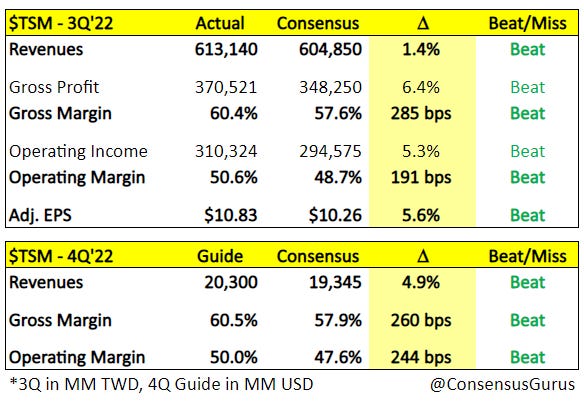
If you haven’t seen – I went on YAVB to do a podcast appearance about my recent long piece on SiTime. I would encourage you to go watch it if you found the SiTime thesis interesting but a bit difficult to digest. Also, this substack is a reader-supported endeavor, and sharing and subscribing makes a meaningful difference to me. ShareIf you’ve found my work helpful in the past, every little bit matters to me. Thank you. This week I need to talk about quite a few things. First, I want to talk briefly about US export restrictions. I read the… […]